About Dr. Steve Tutty
A licensed clinical psychologist specializing in child, forensic and neuropsychology, who evaluates both developing brains and injured ones.
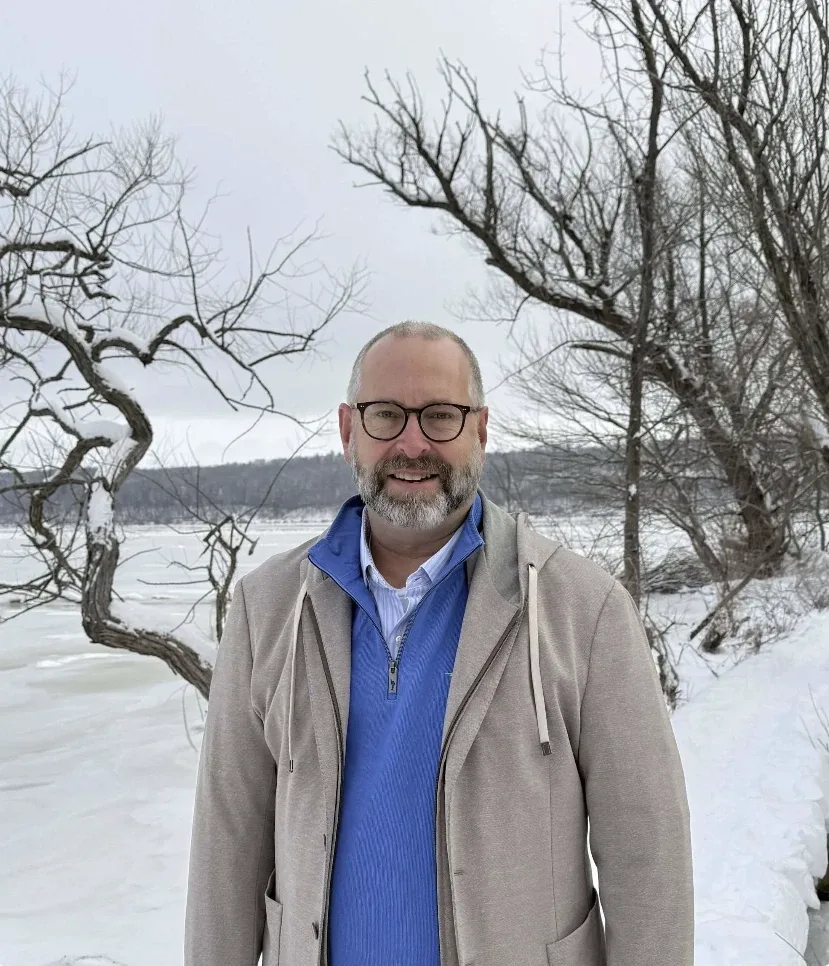
Dr. Steve Tutty is a licensed clinical psychologist with more than 30 years of direct clinical and forensic practice, and more than 20 years of teaching, research and publishing in clinical psychology across several US states.
Two Kinds of Neuropsychological Work
Most of Dr. Tutty's evaluation work falls into two groups. The first is children and adolescents with complex neurodevelopmental profiles: he has evaluated or treated more than 2,300 of them, including autism, ADHD and twice-exceptional (2E) presentations. The second is adults in personal injury litigation: he has evaluated more than 535, often after a traumatic brain injury.
The two groups have more in common than it might seem. In both, the task is to measure what a person can and can't do right now, figure out why, and turn that into a practical plan, whether the plan is for a third-grade classroom or a rehabilitation team.
Counseling First, Then Evaluation
Before establishing his evaluation practice, Dr. Tutty spent a decade counseling children, mostly with ADHD and autism, and adults, mostly with depression. That hands-on experience still shapes his reports: recommendations are written for the people who will have to carry them out.
Research
He is a National Health Scholar and a Scientific-Practitioner. He co-authored a randomized clinical trial on ADHD with pediatrician Harlan Gephart, MD, published in the Journal of Developmental and Behavioral Pediatrics in 2003, and worked on randomized trials of telephone-based depression care with principal investigator Greg Simon, MD, beginning in 2000. That work, published in JAMA (2004), the Journal of Consulting and Clinical Psychology (2007), General Hospital Psychiatry (2005) and Behavior Therapy (2010), was part of the early telehealth movement.
- Telephone psychotherapy and telephone care management for primary care patients starting antidepressant treatment: a randomized controlled trialSimon GE, Ludman EJ, Tutty S, Operskalski B, Von Korff M. JAMA. 2004;292(8):935–942.
- Enhancing behavioral and social skill functioning in children newly diagnosed with attention-deficit hyperactivity disorder in a pediatric settingTutty S, Gephart H, Wurzbacher K. Journal of Developmental and Behavioral Pediatrics. 2003;24(1):51–57.
- A randomized trial of telephone psychotherapy and pharmacotherapy for depression: continuation and durability of effectsLudman EJ, Simon GE, Tutty S, Von Korff M. Journal of Consulting and Clinical Psychology. 2007;75(2):257–266.
- Feasibility and acceptability of a telephone psychotherapy program for depressed adults treated in primary careTutty S, Ludman EJ, Simon G. General Hospital Psychiatry. 2005;27(6):400–410.
- Evaluating the effectiveness of cognitive-behavioral teletherapy in depressed adultsTutty S, Spangler DL, Poppleton LE, Ludman EJ, Simon GE. Behavior Therapy. 2010;41(2):229–236.
New York
Dr. Tutty has long roots on the East Coast. His adult children moved to New York for college, and after years of visiting, the city has come to feel like home. In his spare time he hikes along the Hudson and in the Catskills.
The Team
Katreace Moore, MS-P, MSP-MAC, SUDP provides supervised psychometric testing for children and young adults, covering ADHD, the autism spectrum, learning disabilities, complex mood conditions and PTSD.
Aspyre Psychology
Manhattan Neuropsychology is an information site by Dr. Tutty. Evaluations are provided through his practice, Aspyre Psychology, at 353 Lexington Ave, New York, NY 10016.
Manhattan Office:
353 Lexington Ave,
New York, NY 10016
Contact
Phone
332-232-3696
IN PERSON AND/OR VIDEO APPOINTMENTS AVAILABLE
Contact Us
Tell us a little about the person who needs the evaluation and what's prompting the question. We'll get back to you to set up a free 15-minute consultation by phone or video.